
Autoclave & Cleaning Effects
The Hidden Effects of Autoclave Cycles & Cleaning Agents
Medical device UDI marks must withstand numerous autoclave cycles and exposure to aggressive cleaning agents. This page demonstrates how the initial oxide layer structure established during laser marking evolves over time, and how cleaning agents containing chlorides can dramatically accelerate corrosion in compromised surfaces.
Standard Nanosecond Laser Process
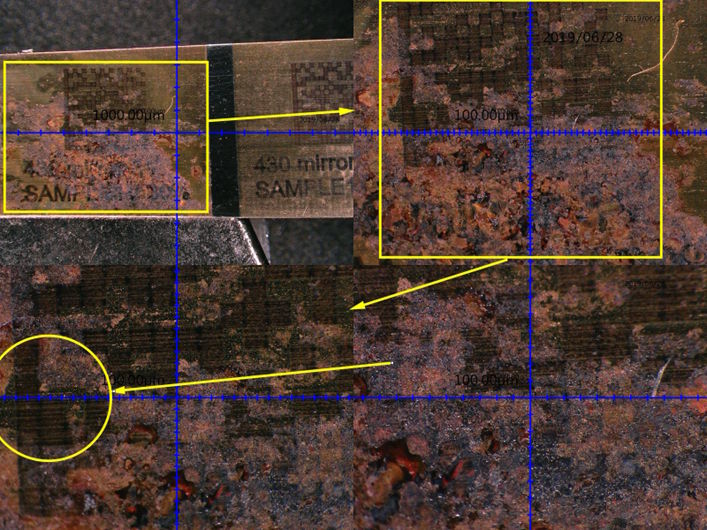
Corrosion analysis of UDI mark
Duplex Oxide Structure Evolution – Autoclave 0
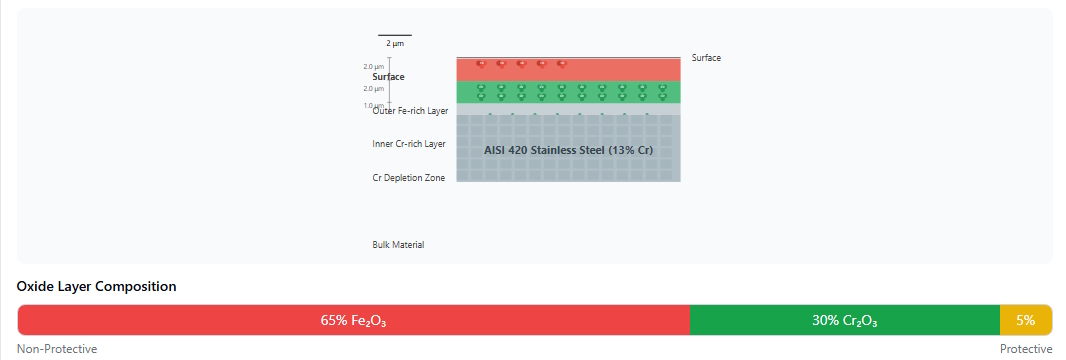
Initial dual-layer oxide structure with balanced Fe₂O₃/Cr₂O₃ ratio and minimal Cr depletion
UDI Mark Quality
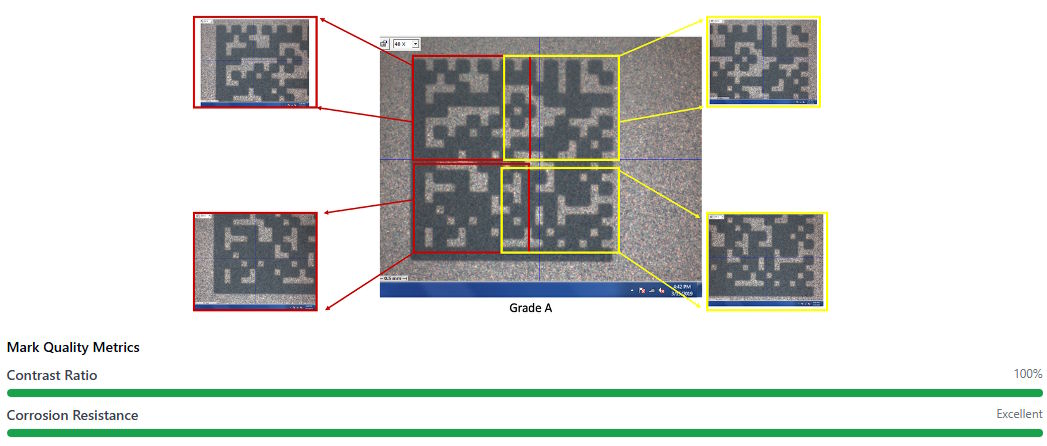
Initial UDI mark shows clear contrast and excellent readability with 100% contrast ratio.
Duplex Oxide Structure Evolution – Autoclave 10
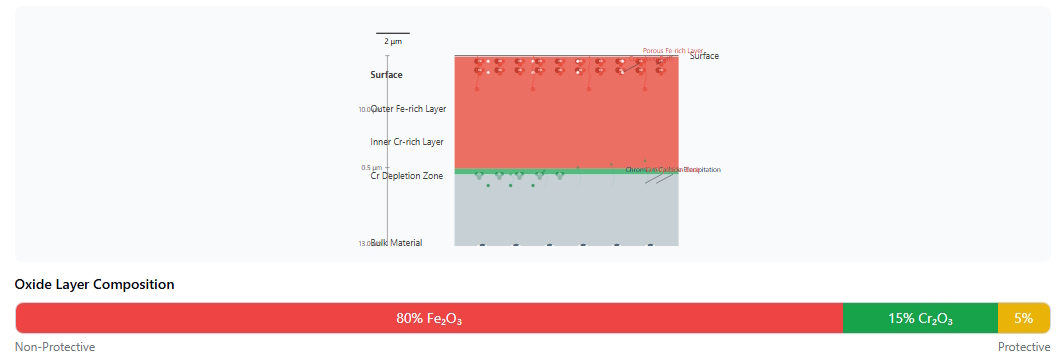
After 10 autoclave cycles, Fe diffusion creates a 10.0μm thick Fe-rich outer layer with 13.0μm Cr-depleted zone.
UDI Mark Quality
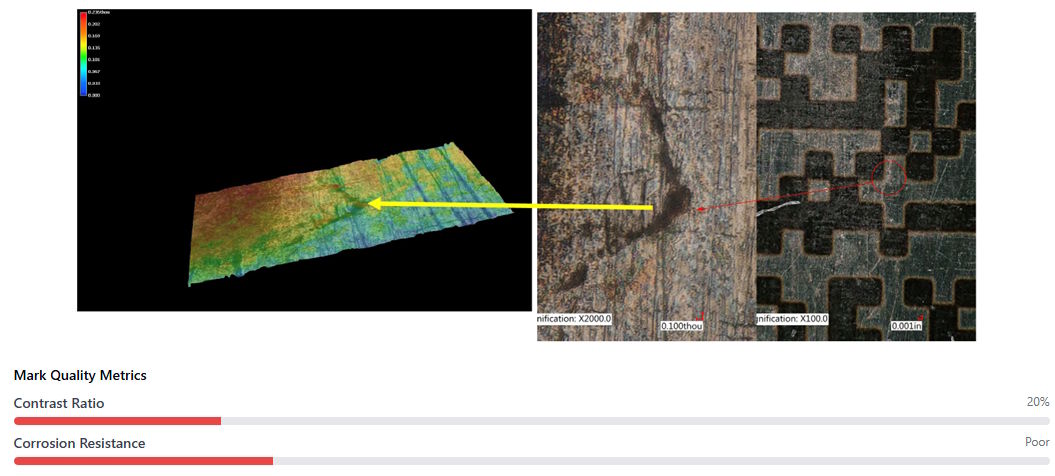
After 10 autoclave cycles, compromised duplex oxide layer allows corrosion progression, reducing UDI mark contrast by ~100%.
Thermal-Matched Process
Duplex Oxide Structure Evolution – Autoclave 0
After 0 autoclave cycles, the thermal-matched process maintains a stable duplex structure with a dominant protective Cr₂O₃ inner layer.
UDI Mark Quality
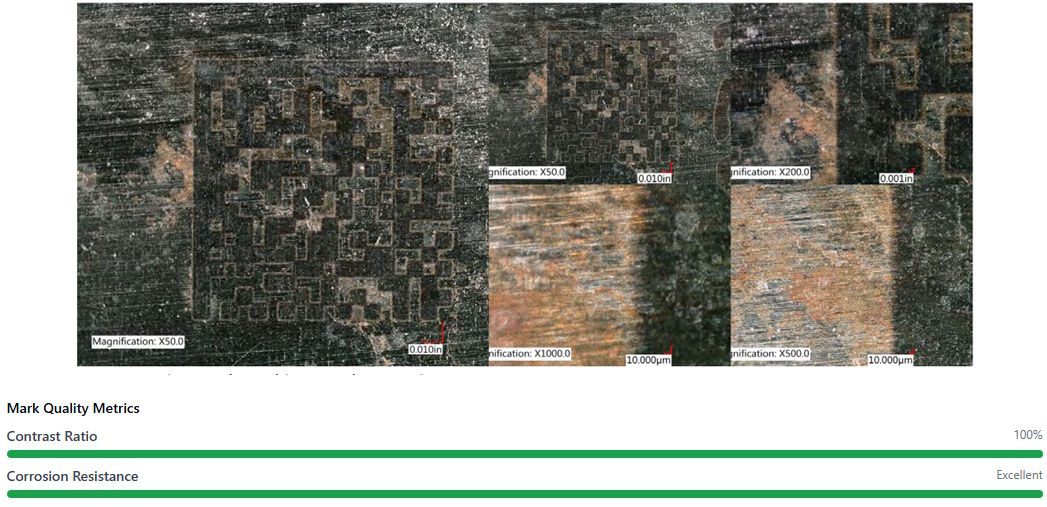
After 0 autoclave cycles, the thermal-matched process maintains stable oxide structure, preserving UDI mark quality with only a 0% reduction in contrast.
Duplex Oxide Structure Evolution – Autoclave 10
After 10 autoclave cycles, the thermal-matched process maintains a stable duplex structure with a dominant protective Cr₂O₃ inner layer.
UDI Mark Quality
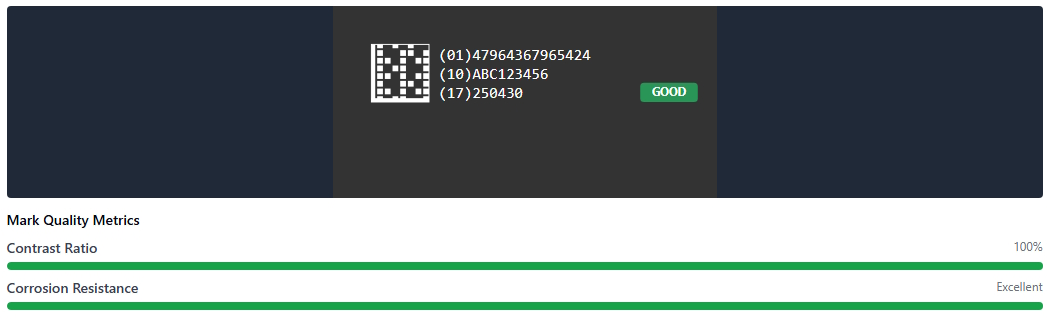
After 10 autoclave cycles, the thermal-matched process maintains stable oxide structure, preserving UDI mark quality with only a 10% reduction in contrast.
Technical Reference:
FDA guidance recommends that UDI marks remain readable for the entire expected life of the medical device. For reusable surgical instruments, this typically requires maintaining readability through 25+ autoclave cycles.