
The Physics Behind Engineering Resin Laser Marking
Understanding optical penetration depth, thermal accumulation, and material-laser interactions for optimal polymer marking solutions.
Critical Polymer Marking Challenges
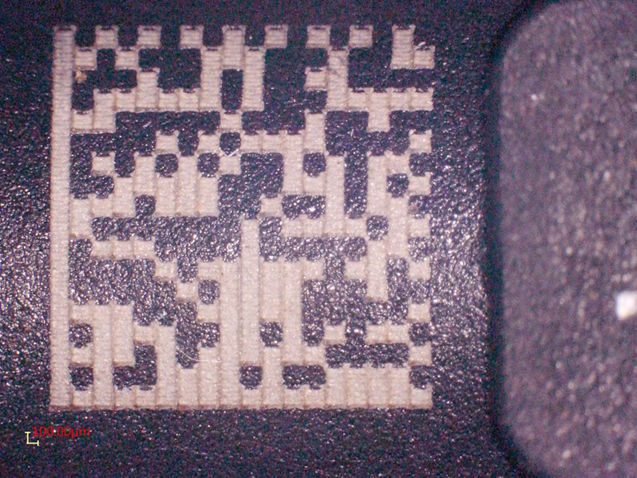
Why do your polymer parts foam instead of marking cleanly?
Polymer foaming occurs when laser energy penetrates too deeply into the material, creating thermal accumulation beyond surface layers. This physics mismatch causes gas evolution throughout the penetration depth rather than controlled surface ablation.
Why do identical-looking polymers require different marking parameters?
Each polymer has unique optical properties determining how deeply laser energy penetrates. Materials with similar appearance can have penetration depths varying from 10μm to 500μm at the same wavelength, requiring fundamentally different approaches.
Why do your medical device UDI marks fail verification after sterilization?
Thermal accumulation zones extend deeper than visible marks, creating subsurface stress and degradation. During sterilization cycles, these hidden damaged zones cause mark distortion, contrast loss, and verification failures.
Process Physics Mismatch Indicators
- Foaming or bubbling instead of clean marks
- Excessive heat-affected zones around marks
- Inconsistent results across material batches
- Poor contrast despite power adjustments
- Mark degradation after environmental exposure
Hidden Physics Parameters
- Optical penetration depth varies 50x between wavelengths
- Thermal accumulation zones extend beyond visible marks
- Polymer chain scission creates hidden weaknesses
- Crystallinity changes affect optical properties
- Additive absorption dominates bulk polymer behavior